In an era when destination marketing must juggle authenticity, sustainability and deep emotional connection, the latest iteration of Tourism New Zealand’s long-running “100% Pure New Zealand” brand offers an instructive case study for advertisers and marketers alike. With its new global campaign — conceived in partnership with TBWA\New Zealand — the message is simple yet powerful: Everyone can find their version of 100% Pure NZ.

Launched in mid-2025, the campaign invites the world to “Find your 100%” in Aotearoa. The concept embraces the idea that fulfilment doesn’t look the same for every traveller: some may seek adrenaline-fuelled adventure, others serene wilderness, cultural immersion, food and wine, Māori heritage, or simple time to recharge. The brand is signalling that New Zealand can deliver each of these — and that you needn’t compromise.
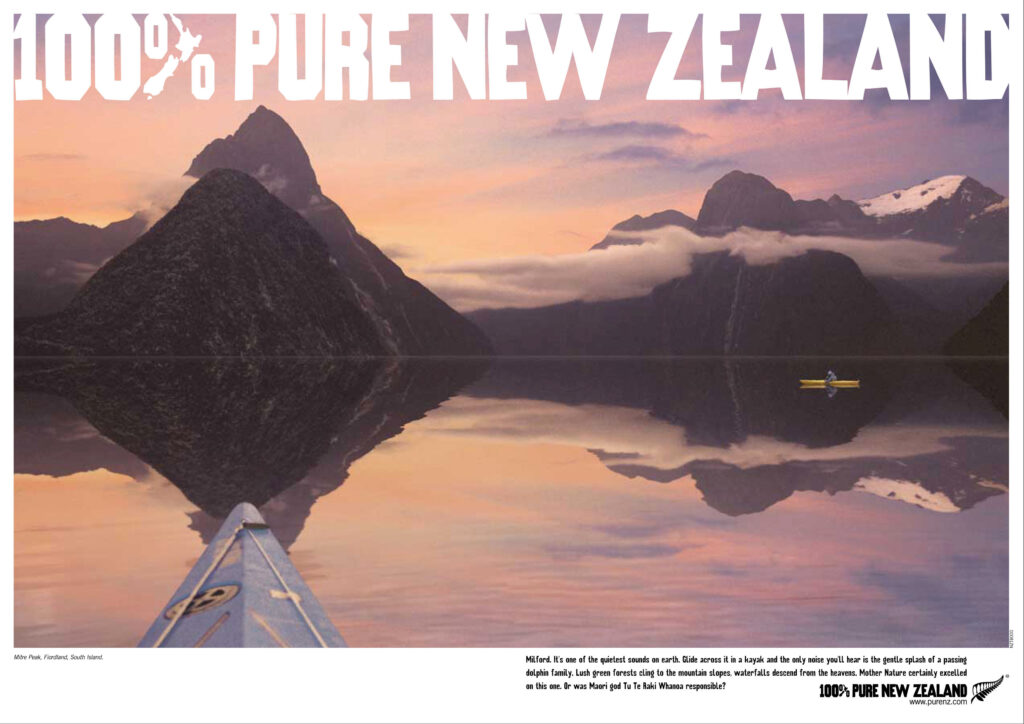
What makes this campaign so compelling from an advertising-perspective is the way it honours the legacy of the brand, while evolving it for a new age. The “100% Pure New Zealand” slogan first appeared around 1999/2000 and has since become one of the most enduring destination-marketing platforms in the world. For decades it emphasised wild landscapes, clean air, unspoilt nature, the “pure” promise. But today’s travellers expect more than a postcard—they expect meaning, connection, personal identity.
So the refresh does three things particularly well:
1. Layering meaning over place.
Instead of presenting New Zealand merely as drop-dead scenery, the new campaign highlights people, culture, emotion: “we know a trip to New Zealand is a no-compromise unforgettable holiday … whether that’s finding rejuvenation in nature, enjoying our world-class culinary scene, or being welcomed by our friendly locals.” That shift from “wow look at the place” to “this place interacts with you and helps you find your version of fulfilment” is a hallmark of modern destination marketing—and it’s just as relevant to any brand.
2. Personalisation of the promise.
The core line “Find your 100%” invites the consumer to define their own journey. The campaign website spells it out: “Whether you want a trip full of 20% adventure and 80% relaxation, or 50% nature and 50% vibrant culture, you’ll find your 100% Pure New Zealand.” That flexibility turns the brand from a static postcard into a personal journey—an approach that other tourism, lifestyle and experience-based brands could learn from.
3. Using heritage as credibility, not constraint.
Rather than abandoning past positioning, Tourism New Zealand honours it: 100% Pure has served the country for more than 25 years. The new campaign doesn’t throw that away; it revitalises it. “This iteration … injects fresh energy into 100% Pure New Zealand’s enduring 25-year history.” This underlines an important lesson: Brands with heritage shouldn’t always chase novelty—they can evolve their promise while retaining the trust and recognition already built.

From an advertising operations standpoint, the roll-out also deserves attention. The campaign spans paid media, social, trade, digitals, is global in scope (not just Australia or the UK), and targets a very large pool of 155 million people who are actively considering a NZ trip. That sheer scale and integrated channel mix shows how national destination marketing is increasingly functioning like global brand marketing—fluid across markets yet centralised in strategy.
What can marketers in other sectors draw from this? A few insights:
- Embrace the emotional alongside the functional. Even for a destination known for its spectacular landscapes, Tourism New Zealand realised that the functional benefit (beautiful place) is no longer enough on its own. The campaign layers in emotional fulfilment, identity, presence and choice.
- Offer personal choice within the brand promise. “Find your 100%” subtly says: whatever your version of ideal is, this brand accommodates it. For non-travel brands this might translate into configurability, segmentation, or simply acknowledging that customers want to define things for themselves.
- Leverage heritage, but refresh narrative. The 100% Pure brand had credibility; the refresh didn’t abandon it but modernised the voice. Brands with legacy can take a similar path: evolve meaning, not just aesthetics.
- Think globally/local strategy, multi-channel execution. The campaign demonstrates scale, but also local relevance (people, culture). Even small-budget brands can borrow this by ensuring their messaging resonates emotionally and channels are chosen with purpose.
- Use a unifying platform but allow diverse interpretation. The campaign works because each traveller can interpret “their 100%” differently—but the central platform remains consistent. Brands can adopt a similar strategy: a strong big-idea that accommodates diverse consumer stories.
In sum, Tourism New Zealand’s “Find your 100%” campaign is more than a tourism push—it’s a textbook in how to modernise a legacy brand, frame a compelling consumer promise, and activate it globally. For anyone working in advertising, destination marketing, or brand strategy, it offers instructive take-aways. Whether you’re selling a place, a product or a purpose, the message is clear: anchor in authenticity, invite personal meaning, and enable the audience to see themselves in the story.
As the campaign rolls out across screens and devices, it will be interesting to watch how travellers respond—and how the brand’s promise holds up in the face of changing traveller values (sustainability, authenticity, local culture). But for now, the work done by Tourism New Zealand and TBWA\NZ deserves a close look by anyone in the business of persuasive storytelling.