

Every holiday season, brands chase the same elusive prize: a Christmas ad that escapes the media plan and becomes culture. In 2025, a French supermarket chain pulled it off with a storybook-style animated short about… a wolf.
Intermarché’s “Le mal aimé” (“Unloved”) didn’t just rack up massive global attention. It also landed a rare effectiveness headline: a 5.0 Star score from System1, which WARC reports as the highest-scoring French creative in that measurement method. That combination—viral and effectiveness acclaim—is exactly what most festive films promise in pitch decks but rarely deliver in real life.

So what’s the secret sauce here? It’s not a celebrity cameo, an over-engineered plot twist, or a glossy AI-generated wonderland. It’s something simpler (and harder): craft, restraint, and a universal emotional engine.
The story in one sentence (and why that matters)
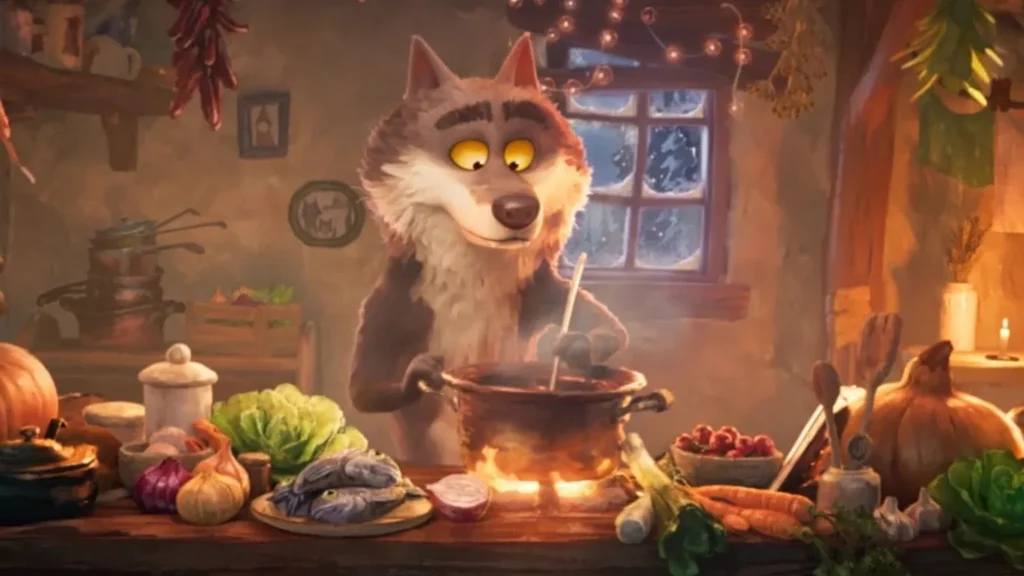
“Unloved” opens in live action with a child frightened by a toy wolf; a parent reframes the fear through a tale. We then slip into animation: a lonely wolf, rejected by other animals, decides to change—he learns to cook vegetables, brings a dish to a Christmas feast, and finally earns a place at the table.
This is classic fable structure: outsider → effort → transformation → belonging. It’s instantly legible across languages, which helps explain why people share subtitled versions so easily.
For advertisers, that clarity is the first lesson: virality travels faster when the emotional “file” is lightweight. You don’t need viewers to decode lore; you need them to feel something in the first 10 seconds.

“AI-free” isn’t a gimmick — it’s the context hook
A big part of the conversation around “Unloved” is what it doesn’t do. Euronews and AP both emphasize the absence of generative AI and the audience appetite for work that feels human-made. In a year where plenty of holiday creative has been criticized as glossy-but-hollow, the Intermarché film positions itself as the opposite: handcrafted, warm, and patient.
Even better: the “AI-free” point isn’t bolted on as a moral speech. It’s embedded in the viewing experience. The painterly world, the character acting, the tiny expressions—those are exactly the places where audiences sense the labor. AP notes the team “painstakingly shaped every gesture, expression and detail.”
If you’re trying to translate this into a practical strategy note, make it this: don’t just say “authentic.” Show the receipts through the work.
Craft takes time, and this film makes time visible
The production story itself became part of the narrative. Euronews credits Romance (agency), Illogic Studios (animation, Montpellier) and Wizz (Paris production), and mentions roughly a year of work by around 80 people. Le Monde cites a similar human-heavy effort—roughly 60–70 people across about six months of production—while highlighting how that collaboration contrasts with the current AI climate.
You don’t need the exact headcount to be the takeaway. The takeaway is that viewers can tell when a brand invests. The ad doesn’t rush emotional beats. It lets the wolf fail, try again, and grow. And because it’s over two minutes long, it has space to earn its ending rather than forcing it.
That’s the second lesson: in a scroll-first world, the “long” ad can still win—if every second pays emotional rent.


Effectiveness: why System1’s score is a marketer’s headline
WARC’s angle matters because it moves the conversation from “everyone loved it” to “this is likely to build the brand.” System1’s Star Rating is positioned as a predictor of long-term brand-building potential based on emotional response; WARC notes 5.0+ is “exceptional,” and cites an average French TV score of 2.4 Stars for context.
Why does “Unloved” perform so well in that frame?
- It leads with emotion, not product. The film earns attention through story, then lets the brand benefit from the halo.
- It lands a broadly resonant message. WARC points to the line “We all have a reason to eat better,” which can live beyond the festive window.
- It makes the brand role feel additive. Food isn’t a random prop; cooking (vegetables!) is the mechanism of the wolf’s change.
This is the sweet spot for retail advertising: you’re still in groceries, but you’re selling meaning, not SKUs.
The “vegetarian wolf” debate is a feature, not a bug
Of course, the internet can’t resist a culture-war side quest. Euronews notes some backlash framing the ad as “promoting vegetarianism,” while also reporting Intermarché’s response: it’s not a campaign to stop eating meat; it’s a story about not excluding the wolf (who won’t eat his new friends).
From a communications perspective, this is a reminder that strong creative makes a choice, and choices create discussion. The key is whether the discussion ties back to brand meaning. Here, it does: better food, better choices, better together.
What advertisers should steal from “Unloved” (without copying it)
You can’t (and shouldn’t) copy a viral Christmas short. But you can copy its operating principles:
- Build a story with a universal spine: belonging, change, forgiveness, reunion.
- Let craft be the flex: if you want “human,” put humans on screen—in the work, not just the press release.
- Make the product role structural: food isn’t decoration; it’s the plot device that unlocks transformation.
- Optimize for rewatch and sharing: clear narrative, strong music cue (Claude François), and visual warmth that reads even on a phone.
Intermarché didn’t “win Christmas” by doing something wildly new. It won by doing something increasingly rare: trusting audiences with sincerity—and trusting craft with the job of persuasion.
And that’s the real marketer takeaway for 2026: in a time flooded with synthetic content, the most scalable tactic might be the least automated one.

