

In the world of advertising, some brands have it easy. They sell soda, sneakers, or smartphones—products that people actually want to buy. But what happens when your “product” is a 160-year-old humanitarian legacy, and your “consumer” is a donor who thinks you only exist in far-away war zones?
This was the Herculean task facing the French Red Cross (Croix-Rouge française) during their 2021 National Days (Journées Nationales).
With a 90-year-old tradition to uphold and a post-pandemic public to re-engage, the organization didn’t just ask for change. They launched a multi-channel masterclass in “The Architecture of Proximity.” From cinematic TV spots inspired by Alfred Hitchcock to viral TikTok challenges featuring global soccer stars, the 2021 campaign proved that even the most established icons can learn new tricks.
Let’s dissect how they did it.
The Strategy: Closing the “Distance Gap”
For decades, the Red Cross has suffered from a bit of a “Global Super-Hero” complex. When people see that red emblem, they think of the International Committee of the Red Cross (ICRC) in Geneva. They think of earthquakes in Haiti or conflict zones in South Sudan.
While that’s great for prestige, it’s a nightmare for local fundraising.
The 2021 campaign, titled “Si vous donnez en bas de chez vous, vous aidez en bas de chez vous” (If you give at your doorstep, you help at your doorstep), was a radical pivot. The goal? Convince the French public that the Red Cross isn’t just a global responder—it’s your neighbor.
The Power of Local ROI
The “National Days” are the only time all 1,000 local units across France collect funds simultaneously. Crucially, the money stays exactly where it was collected. To make this “abstract” charity feel “concrete,” the 2021 campaign broke down the math for donors:
- 4€: A complete meal for a neighbor in need.
- 20€: 100 emergency survival blankets.
- 30€: A medical consultation for someone local.
By framing the donation as a neighborhood investment rather than a global drop in the bucket, they lowered the psychological barrier to giving.


The Creative Centerpiece: Hitchcock at Your Window
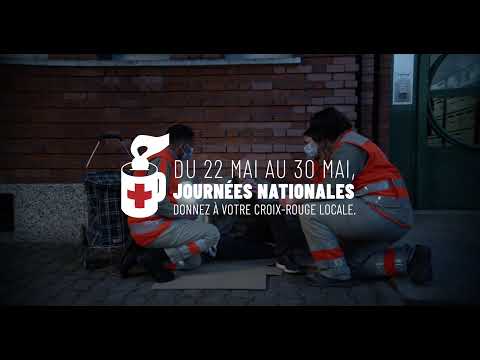
To bring this “doorstep” strategy to life, the agency Babel went full cinematic. They produced a film directed by the duo Original Kids that utilized a stunning “plan séquence” (sequence shot).
The Voyeuristic Descent
The camera starts at the top of a quintessential French apartment building. We peer through windows, hearing news reports of global crises—the “international noise” we usually associate with the Red Cross.
But then, the camera descends.
As we travel down the facade (a deliberate nod to Hitchcock’s Rear Window), the noise of the world fades. By the time we hit the ground floor, we see the tactile reality: a team of Red Cross volunteers assisting a vulnerable person right at the building’s entrance.
The takeaway was instant: The Red Cross is downstairs while you’re upstairs.
Technically, the film was a marvel. Director of Photography Patrick Duroux had to balance the intimate, shadowed lighting of the apartments with the bright, natural light of the street, all while maintaining the illusion of a single, continuous vertical drop. It wasn’t just an ad; it was an exercice de style.
The Digital Viral: From First Aid to TikTok Fame
While Babel handled the “prestige” TV audience, the digital agency Kewl (a division of Konbini) was tasked with the impossible: making first aid “cool” for Gen Z.
Enter the #PLSChallenge.
In France, PLS stands for Position Latérale de Sécurité (the recovery position). It’s the most basic life-saving skill, but it’s hardly “trendable” content—until 2021. The campaign challenged TikTok and Instagram users to demonstrate the move in short, snappy videos.
The Mbappé Effect
The campaign didn’t rely on luck. They brought in the big guns. Global soccer icons Kylian Mbappé and Antoine Griezmann shared their own #PLSChallenge videos. When the world’s most expensive strikers start rolling on the floor to show how to save a life, people pay attention.
The result? The #PLSChallenge took home the Gold Prize at the 2021 Effie France Awards in the NGO category, proving that you can drive serious civic behavior on a platform usually reserved for lip-syncing.
The Ambassadors: A Tale of Two Stories
The 2021 campaign also showcased a brilliant “Dual-Ambassador” narrative, bridging the gap between historical legacy and intellectual depth.
The Pillar: Adriana Karembeu
Adriana Karembeu isn’t just a face; she’s an institution. By 2021, she had been the Red Cross goodwill ambassador for 26 years. A former medical student, she brings technical credibility to the table. Her 2021 message was simple: continuity. She reminded donors that their money fuels the volunteers they see every day.
The Return: Marc Levy
To add a fresh narrative layer, the campaign recruited Marc Levy, France’s most-read novelist. Levy isn’t just a celebrity; he was a Red Cross volunteer 40 years ago as a student. His involvement was designed to inspire “Volunteer for a Day” (Bénévole d’un jour) recruitment. He represented the “volunteer-to-visionary” archetype, proving that the Red Cross is a community that stays with you for life.
Professional Solidarity: More Than Just Street Tins
Proximity isn’t just about where you live; it’s about where you work. On LinkedIn, the Red Cross launched the “Avançons Ensemble” (Let’s Move Forward Together) initiative.
Using the platform’s #OpenToWork tools and LinkedIn Live, the organization highlighted its role in social reintegration and micro-credit. They weren’t just asking for money; they were facilitating connections between vulnerable job-seekers and potential employers. This B2B approach reached over 3.5 million views in a single week, positioning the Red Cross as a vital actor in the professional ecosystem.


The “Architecture” in Action: From Paris to Nouméa
The “Architecture of Proximity” wasn’t just a Parisian concept. It was deployed across all French territories, including overseas departments.
In New Caledonia, the 2021 National Days adapted the “neighborhood” strategy to fight illiteracy and support local social links through “Boutiques solidaires.” Whether it was a street collection in Orly or a literacy program in Nouméa, the message remained consistent: We are right here.
Conclusion: Why the 2021 Campaign Still Matters
The 2021 French Red Cross National Days campaign was a masterclass in Hyper-Local Branding.
By the end of the year, the organization saw its volunteer force grow to over 65,000. They proved that in an age of global digital noise, the most powerful message you can send is one that points to the street corner downstairs.
They successfully evolved the humanitarian ad from the “celebrity intrigue” of the early 2000s to a sophisticated, technically daring defense of real-world proximity. In doing so, they didn’t just collect coins in tins—they rebuilt the social contract between an ancient institution and a modern neighborhood.
The 2021 campaign was a reminder that while the Red Cross may be “inarrêtables” (unstoppable) globally, they are most important right “bas de chez vous.”

