


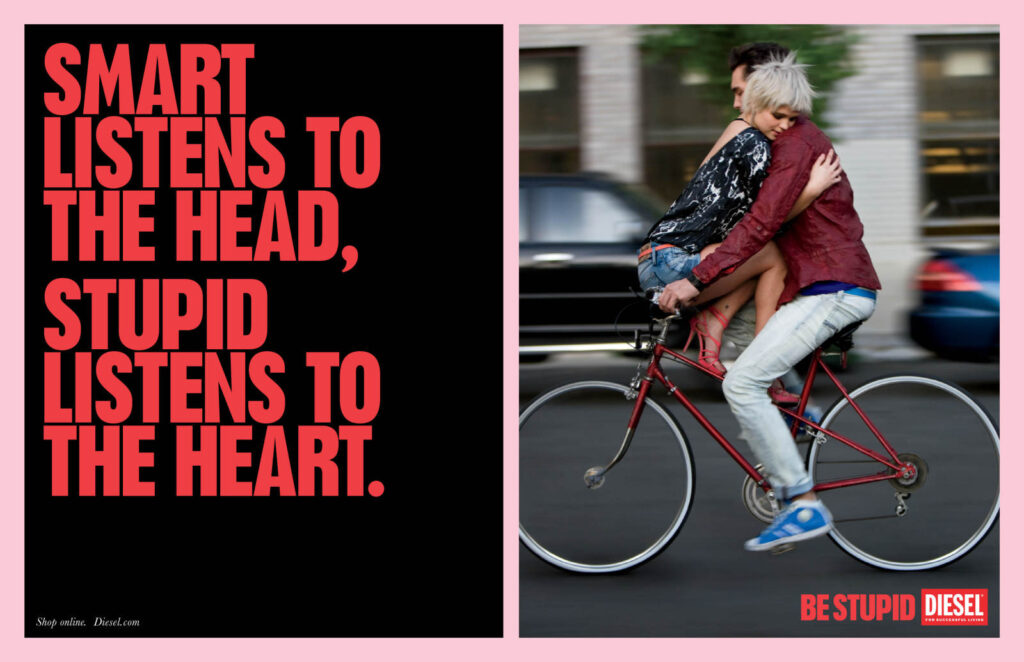
The landscape of fashion advertising in the late 2000s was characterized by a palpable sense of creative exhaustion. As the global economy reeled from the 2008 financial crisis, many heritage brands retreated into safe, conservative messaging, prioritizing product durability and classic aesthetics over the provocative storytelling that had defined the industry’s golden era. Diesel, the Italian denim powerhouse founded by Renzo Rosso in 1978, was not immune to this stagnation. Once heralded as the ultimate “rebel with a cause,” the brand had spent the better part of three decades challenging social norms through its “For Successful Living” and “Only The Brave” platforms. However, by 2009, internal and external observers noted that Diesel’s edge had begun to dull; the brand was seen as safe, derivative, and increasingly out of touch with a younger generation that viewed traditional advertising with skepticism.
The response to this decline was a radical strategic pivot: the “Be Stupid” campaign. Launched in January 2010, this initiative was not merely a set of advertisements but a comprehensive brand philosophy that sought to redefine the concept of intelligence and risk-taking for a new decade. Created by the advertising agency Anomaly, “Be Stupid” became one of the most awarded—and controversial—campaigns in the history of fashion marketing, winning the Grand Prix at Cannes while simultaneously being banned by regulators in the United Kingdom. This report provides an exhaustive analysis of the campaign’s creative genesis, its philosophical underpinnings, the regulatory and social firestorms it ignited, and its ultimate impact on Diesel’s commercial trajectory and brand identity.


The Strategic Imperative: Reclaiming the Rebel
By 2010, Diesel’s market momentum was fading. Sales were lagging, and the cultural cachet that had allowed the brand to charge premium prices for distressed denim was under threat. The brand’s identity had historically been built on irony and anti-conformity, but the messaging had become predictable. Renzo Rosso, ever the iconoclast, recognized that to survive, Diesel needed to stop selling clothes and start selling a way of thinking. The goal was to re-engage with the “European bad boy” archetype and appeal to a demographic that valued authenticity and impulsiveness over the calculated, polished imagery of mainstream luxury.
The selection of Anomaly as the agency of record was a pivotal moment in this revitalization. Anomaly, a firm that prides itself on “overthrowing established canons,” was given the mandate to push “all the wrong buttons”. The agency’s guiding principle—that traditional advertising models were broken—aligned perfectly with Rosso’s desire for a disruptive approach. The pitch was won on the strength of a single, provocative idea: that “smart may have the brains, but stupid has the balls”.

The Philosophy of ‘Stupid’: A Manifesto Analysis
At the core of the campaign was a 191-word manifesto that served as a foundational text for all creative executions. This script was a rhetorical masterpiece, designed to systematically deconstruct the value of intelligence—”smartness”—and elevate its opposite—”stupidity”—to the level of a heroic virtue. The manifesto argued that the fear of looking stupid was the “crusher of possibility” and the “world’s greatest deflator,” while “stupid” represented the “relentless pursuit of a regret-free life”.
This philosophy was not an endorsement of low intelligence, but rather a celebration of intuition, bravery, and the willingness to fail. In the world of the campaign, “smart” was characterized as stuffy, risk-averse, and critical, whereas “stupid” was creative, daring, and visionary. By framing intelligence as a form of social constraint, Diesel offered its customers a path to liberation. To “be stupid” was to follow one’s heart instead of one’s head, a message that resonated deeply with a target audience of young adults looking to discover their true potential.
The Creative Process: Brainstorming Chaos
The development of the “Be Stupid” campaign took place over an intensive three-month period of brainstorming at Anomaly. The creative team, led by Mike Byrne, sought to move beyond the traditional boundaries of fashion marketing. They aimed for an aesthetic that felt unpolished and authentic, mimicking the burgeoning digital snapshot and meme culture of the time. This visual language, characterized by high-contrast photography and all-caps typography, was heavily influenced by the “FAIL” phenomenon that was then dominating the internet.
Unlike the meticulously staged shoots typical of luxury brands, the “Be Stupid” project embraced spontaneity and improvisation. The team, including photographers Chris Buck and Melodie McDaniel, often worked without a rigid script, allowing ideas to evolve organically based on the location and the input of prop masters like Chime Day Serra. This approach sometimes led to technical challenges; for instance, a surreal, gravity-defying shot involving models and sideways benches required hours of trial and error before the team realized that a more relaxed, spontaneous take was superior to the “smart,” overly posed versions.
The campaign was eventually distilled from a pool of 150 images into a final selection of 80, each paired with a punchy, ironic headline. These headlines, such as “Stupid is trial and error. Mostly error,” served as a thought-provoking nudge to the consumer, suggesting that “stupid” might be the key to unlocking brilliance.


Typography and the Visual Lexicon: The Role of Placard
The visual identity of the “Be Stupid” campaign was anchored by its unique typographic choices. The agency selected Placard, a condensed sans-serif typeface originally released by Monotype in 1937. The text was consistently presented in all-caps, set with extremely tight leading and arranged in dense, stacked blocks. This choice was deliberate: the bold, condensed nature of Placard commanded attention in high-traffic urban environments, while its lack of visual hierarchy—using one typeface and one size—created a sense of raw, democratic urgency.
Design critics noted that the older cuts of Placard used in the campaign provided a “crispness” and “snappy” quality that modern digital updates sometimes lacked. The fluid design of the letter ‘S’ and the high contrast in the letter ‘A’ contributed to a composition that felt both “crisp” and “knackig” (German for snappy). Furthermore, the typography subtly mimicked the “Impact” font used in early internet memes and LOLCat images, reinforcing the campaign’s connection to the target audience’s digital lifestyle.
Target Audience and Cultural Context: The ‘YOLO’ Generation
Diesel engineered “Be Stupid” to resonate with a specific cohort of young consumers characterized as “ambitious, risk-taking go-getters”. This demographic, often referred to as “Generation I” or the “YOLO” (You Only Live Once) generation, valued passion and ingenuity over book smarts or traditional career paths. The campaign tapped into a burgeoning entrepreneurial spirit; statistics at the time showed that 18-to-24-year-olds were starting companies at a faster rate than previous generations.
The cultural context of the 2008 recession played a crucial role in the campaign’s effectiveness. The global financial crisis had undermined the credibility of “smart” institutions and executives who had followed the traditional rules yet saw their systems collapse. To a younger generation witnessing this failure, the traditional, “smart” path appeared increasingly risky, while the “stupid” path of following one’s instincts seemed more authentic and potentially more secure.
Global Reach and Multi-Channel Implementation
The “Be Stupid” campaign was a massive undertaking, executed across print, retail, activations, and digital platforms in more than 50 countries. The media buy was extensive, ensuring that the bold taglines and surreal imagery were plastered across major urban centers from London to New York.
One of the campaign’s most significant experiential components was the “Noah’s Ark” event held at the Truman Brewery in East London. In partnership with Spotify and Dazed & Confused, Diesel hosted a night where 300 competition winners, dressed in Kigu animal costumes, attempted a Guinness World Record-breaking piggy-back race. The venue was transformed into a theatrical environment filled with animal troughs, swinging meat hooks, and distorted wildlife noises, all designed to encourage “stupid animalistic behavior” for one night only. This event exemplified the campaign’s move from passive advertising to active engagement, turning customers into participants in the “Stupid” philosophy.


Regulatory Controversy: The ASA Ban and Public Outcry
The campaign’s success was fueled in no small part by the controversy it invited. In 2010, the UK’s Advertising Standards Authority (ASA) received 33 formal complaints regarding the posters. The complaints alleged that the ads were offensive, condoned antisocial behavior, and were unsuitable for children.
The Specific Banned Executions
The ASA focused its regulatory hammer on two specific posters:
- The CCTV Flasher: This ad featured a woman on a stepladder exposing her breasts to a security camera, accompanied by the headline “Smart may have the brains, but stupid has the balls”.
- The Lion Photographer: This image depicted a woman taking a photograph of her genitalia while a lion prowled behind her.
The ASA ruled that these posters appeared in an “untargeted medium”—outdoors—where they were likely to be seen by children and to cause “serious or widespread offence” to adults. While the watchdog cleared the ads to run in adult-oriented magazines like Grazia and Dazed & Confused, it banned them from public billboards. Diesel’s defense—that the ads portrayed “a very strong and unexpected image of femininity” and tackled the “society’s preoccupation with 24/7 camera surveillance” in a “light and non-threatening way”—was ultimately rejected by the regulator. Rather than wounding the brand, the ban provided millions of dollars in earned media, reinforcing Diesel’s image as a “European bad boy” that refused to play by the rules.
The Awards Circuit: A Polarized Triumph
While regulators were banning the campaign, the advertising industry was celebrating it. At the 2010 Cannes Lions International Advertising Festival, “Be Stupid” shared the Grand Prix in the Outdoor category with an Argentinian campaign for Andes Beer. The jury, led by Tay Guan Hin, praised the campaign as “bold, fresh, lively” and admired its ability to go “against the flow of conventional thinking”.
However, the win was highly polarized within the creative community. Critics argued that the campaign did not deserve the Grand Prix because it did not demonstrate “path breaking thinking on using the Outdoor medium”. While campaigns like HBO’s “Voyeur” or the “Zimbabwe Currency” ads used technology or unique physical interactions to redefine outdoor advertising, “Be Stupid” was a traditional poster campaign. The debate centered on whether a brilliant advertising idea—the manifesto and the voice—was sufficient to win the top prize for a specific medium.


The Legacy of ‘Be Stupid’: From Ad to Corporate Mantra
The impact of the campaign extended far beyond the marketing department. Renzo Rosso was so captivated by the concept that he adopted “Be Stupid” as Diesel’s official corporate philosophy. The theme became the story of the brand’s entire 2010 product catalog and was integrated into retail spaces globally. In 2011, Rizzoli published Rosso’s book, Be Stupid: For Successful Living, which offered a manual of business-tested wisdom for achieving success by embracing one’s instincts and daring to make “stupid” decisions.
The campaign also catalyzed a significant commercial turnaround. According to team members from Anomaly, sales did a “U-turn” following the launch, and the brand successfully re-established its cultural relevance. The “Be Stupid” products became some of the company’s biggest new sellers, demonstrating that a daring brand idea could translate directly into retail success.
Ethical Critiques and Evolving Perspectives
Despite its commercial and creative success, “Be Stupid” has faced scrutiny regarding its social implications. Some critics argued that the campaign glorified a “selfish lifestyle” and promoted a “YOLO” attitude that favored impulse over responsibility. Concerns were also raised about the privilege inherent in the message: the ability to “be stupid” and take risks is often reserved for those with a safety net of wealth and education, a luxury not afforded to the marginalized communities the campaign occasionally referenced.
More recently, the campaign has been cited for instances of cultural appropriation. Specific ads featuring models in sacred Native American headdresses have been condemned as dehumanizing and racist by groups like the Ikiya Collective. These critics point out that using sacred indigenous symbols to sell denim as a form of “stupid” rebellion is both harmful and reductive, highlighting the tension between provocative advertising and cultural sensitivity.
Conclusion: The Endurance of the Asinine
The Diesel “Be Stupid” campaign remains a masterclass in brand revitalization. By leaning into provocation and redefining a common insult as a badge of honor, Diesel managed to cut through the noise of a conservative market and re-connect with a generation of risk-takers. While its methods were controversial and its medium-usage traditional, the campaign’s ability to spark global debate—from the halls of Cannes to the offices of the UK’s advertising watchdogs—is a testament to the power of a bold idea.
In a world that often prioritizes the “smart” and the safe, “Be Stupid” offered a liberating alternative: the courage to fail, the audacity to create, and the relentless pursuit of a life without regrets. For Diesel, taking the risk to “be stupid” turned out to be the smartest decision the brand could have made.

